Inside the demanding arena of modern professional drifting, victory is far more than solely a function of sheer engine power or behind-the-wheel aggression. Conversely, it is now a multifaceted engineering challenge that demands a scrupulous blend of selecting a inherently capable vehicle platform, arming it with the highest-quality drift-spec hardware, and, most critically, grasping its live performance on the track through cutting-edge drift telemetry software. This definitive handbook will serve as your blueprint starting from the initial idea of a drift build right through to the last telemetry-optimized refinements that transform a capable vehicle into a predictable champion. We will delve deep into the methodical process of chassis dynamics adjustment, demonstrating how a state-of-the-art suspension tuning tool like a dedicated telemetry system eradicates assumptions and delivers exceptional clarity into your chassis's real-world performance.
The cornerstone of any exceptional drift car is, without question, the platform itself. Certain cars have achieved legendary reputation within the global drifting scene due to their natural weight distribution, durable build quality, and the immense range of performance support available. Selecting the optimal car is the primary and most crucial decision a builder will make. To illustrate, the the E36 generation BMW is commonly accepted as among the best balanced drift platforms of all time. Its near-perfect balanced front-to-rear weight, combined with a rear-wheel-drive configuration and extremely reliable inline-six powerplants, creates a platform that is both easy to handle for newcomers and highly effective in the hands of a expert driver. The successor of this concept, the BMW E46 platform, builds upon these attributes with a more developed structure, broader stance for enhanced stability, and even a greater degree of turning capability straight from the manufacturer. A different dominant platform in the professional arena is the Corvette C6.
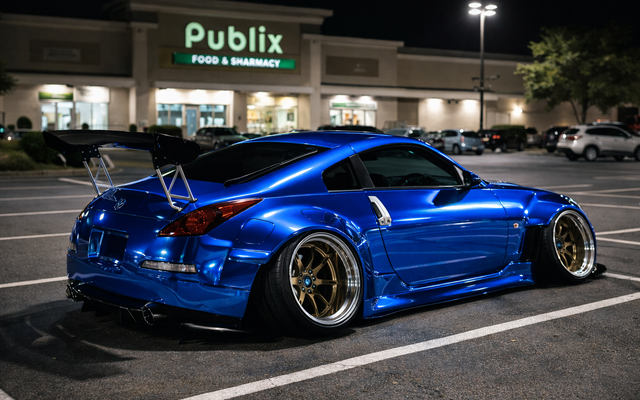
This muscle-derived track weapon offers a particular array of benefits to the drifting sport, featuring a low-mass aluminium chassis, a transaxle-style gearbox and differential unit that contributes to an excellent weight distribution, and the colossal low-end power of a big GM LS engine. This blend renders it an utter force on track, able of initiating and maintaining continuous angles with seemingly minimal application of power. For those desiring remarkable performance per dollar, the Nissan Z33 excels as a prime candidate. It arrives from the manufacturer with a rigid chassis, a decent factory LSD, and the smooth VQ series powerplant that delivers plenty of horsepower and torque for learning and advancing in the sport. Its successor, the Nissan Z34, presents additional advancements in body strength, handling precision, and peak engine performance, establishing its position as a common pick among professional competitors. Additional legendary cars that warrant mention encompass the lightweight rotary-powered Mazda FC, the ubiquitous Nissan S13, the American Ford Mustang SN95, the modern BMW E90, and the small yet incredibly playful and instructive Mazda Miata. All of these chassis provides a unique palette of characteristics, difficulties, and capabilities, but they all have in common the core elements necessary to become a competitive sliding vehicle.
However, choosing the correct chassis is merely the beginning. To access the full capability of any of these cars, significant changes to the steering system and suspension systems are completely non-negotiable. This is where the realm of precision drift-spec parts becomes critical focus. The most most transformative improvement for a serious competition vehicle is the installation of a drift-spec drift angle kit. These advanced assemblies, such as those engineered by performance brands like SLR, are engineered to significantly increase the car's available lock-to-lock rotation. A OEM street car is severely limited in how far its front wheels can turn, a design compromise for daily use. In drifting, conversely, aggressive steering input is frequently necessary to catch and maintain a angle. An modification kit exchanges the stock hubs, rod ends, and sometimes A-arms with pieces that allow the wheels to attain degrees of turn in excess of 70 or even 80 °, as opposed to a average factory angle of around 40 to 50 °.
This tremendously increased steering angle gives the driver with exponentially greater control during a angle, allowing it to be far more straightforward to initiate a drift, sustain it through a extended bend, and transition seamlessly from one direction to the opposite. The difference in controllability is nothing short of transformative. Paired with a correctly chosen modification is the equally essential modification to the vehicle's damping system. Generic or including high-end street dampers are simply not designed for the particular and extreme demands of drifting. A purpose-built pair of suspension units is of utmost importance. These engineered suspension components have specific piston tuning and spring rates that are tuned for the rapid mass transition that is typical of drifting. When a operator initiates a drift, the vehicle's mass is thrown rapidly to the outer of the turn. Correct drift-spec coilovers manage this transfer in a consistent way, enabling the car to settle quickly and giving the driver precise response through the wheel and seat. They additionally allow for accurate adjustment of stance, rebound and compression rate, and cross-weight, which are all fundamental aspects of fine-tuning the car's dynamics to a specific venue or piloting technique. Together, a precision-engineered drift angle kit and a correctly chosen set of drift-spec adjustable dampers constitute the core mechanical base upon which all future tuning is constructed.
Once the essential hardware is installed, the next essential stage in the project is the precise tuning of the car's wheel angles. This is the world of car suspension tuning, a procedure that can seem daunting to the uninitiated but is, in reality, the key to transforming a collection of fast parts into a cohesive and controllable whole. The most critical parameter of tuning for oversteer is definitely camber angle. Camber angle is the angle of the wheel compared to the perfectly straight plane when observed from the front of the vehicle. If the upper part of the tire is tilted towards the chassis, this is known as camber-in. In sliding, an inward tilt on the steering wheels is universally used and is considered necessary. The reason is deeply tied to tire contact.
When a vehicle is turning at extreme slip angles, the frame rolls towards the external of the turn. This lean forces the outside steering tire to diminish its optimal footprint with the asphalt. By adding inward lean, the tire is pre-angled to account for this roll. As the vehicle rolls into the turn, the outside front tire flattens out on the track, optimizing its traction at the critical moment when it is most required for directional command. Usually, front axle camber settings for a competition drift machine range from approximately -3 degrees to as high as -5 degrees or even more, depending on the parameters of the vehicle configuration, compound selection, and operator style. The rear wheels also employ inward tilt, but the settings are typically more conservative and more nuanced than the front axle. Overly aggressive inward lean at the rear can make the car extremely prone to oversteer and challenging to predict on throttle application, as it shrinks the effective contact patch of the powered tires during forward acceleration. Hence, rear angles are often in the ballpark of -1 degree to -3 degrees, finding a delicate compromise between giving adequate lateral bite to aid in initiating and maintaining the slide while simultaneously keeping good grip for exiting the corner. Camber is just one component of the larger tuning picture, which furthermore involves toe angle, caster, and bump steer modification.
Toe describes the angle of the wheels as seen from above. Positive toe means the front edges of the tires are closer together than the trailing edges, while toe-out means the opposite. For drifting, a small amount of front axle toe out is commonly employed to sharpen the turn-in steering reaction, making the chassis feel more responsive and willing to start a drift. Rear toe angle is usually set to neutral or a extremely minute amount of positive toe to promote predictability under throttle. Caster is the frontwards or rearward inclination of the suspension pivot when observed from the lateral of the car. More caster enhances feedback and stability confidence, and it furthermore boosts negative camber effect during steering, which is highly beneficial. Setting these settings is a detailed interplay where a change to a single value can and will impact the remaining parameters. The traditional method for tuning a vehicle's alignment for drifting has long been a labor-intensive affair of guesswork and adjustment. A pilot or team would apply a modification based on experience, drive the chassis on track, rely on the driver's individual feel and impressions, and then make another adjustment. This loop would iterate time after time until the vehicle felt "right" or the available track session was exhausted. This approach is not just exceptionally inefficient in terms of hours and tires, fuel, and parts, but it is additionally deeply inaccurate.
Pilot feel is a famously inconsistent metric, colored by numerous elements such as fatigue, varying track conditions, weather, and just the mindset of the pilot on that particular day. What feels "oversteery" on one run might feel "tight" on the subsequent lap, causing confusing information and counterproductive changes. This age-old limitation in vehicle dynamics optimization is precisely where drift telemetry software state-of-the-art telemetry systems has stepped in to transform the process.
The development and integration of specialized vehicle dynamics tools has introduced a new paradigm for engineering and refining high-performance drift machines. These tools, exemplified by innovative products like GripDial, work by physically measuring the actual physical movement of the car as it is being driven on the track. As opposed to relying on personal feel, these devices acquire quantifiable data on critical factors such as shock absorber movement, wheel speed, G-force loading, lock position, and accelerator and brake pedal position. This collected telemetry is then processed by advanced applications that can visualize and analyze the metrics in a comprehensible format. For the first time, engineers and builders can visualize exactly what the chassis is exhibiting at each millisecond of a lap. This ability transforms the drift angle kits whole suspension tuning workflow. Think about the aforementioned task of setting the front negative camber for a given car. Rather than applying a change from -3 degrees to -3.5 degrees and then testing several laps to try and "feel" a difference, a vehicle dynamics tool can deliver instant and clear feedback. The software can indicate in a chart how the tire's grip is behaving during the critical phases of a drift: the initial flick, mid-corner, and transition. It can demonstrate if the existing angle is enabling the outside front tire to maintain optimal loading or if the rubber is overloaded on its external shoulder.
The tool can subsequently provide empirical suggestions for change. Perhaps the information reveals that the outside front tire is still overloading its outer shoulder at -3.5 degrees of negative camber, implying that an increase to negative camber, say -4 degrees, might be warranted. Alternatively, the information might reveal that the tire is not achieving optimal operating temp or that the inner shoulder is degrading excessively, which could indicate that there is excessive inward lean and a modest lessening back to -3.2 degrees would be more optimal. This level of granularity and actionable intelligence was completely impossible in the time of pure manual tuning.
The effect of using a dedicated suspension tuning tool reaches much further than just dialing in alignment. It becomes an essential suspension tuning guide that is customized to your particular car. When adjusting the damping settings on your suspension, rather than depending on imprecise guidelines or mimicking another driver's setup, you can employ the software to see how the car is reacting in response to your adjustments. The tool can display the wheel movement data over a section of track, revealing if vehicle dynamics tool the shocks are managing the body movement effectively or if they are allowing the car to become unsettled uncontrollably after a transition. It can aid in identifying challenges like excessive compression or excessive extension, permitting you to apply informed adjustments to preload settings, damping values, or ride height. This approach applies similarly to the detailed process of car alignment tuning. In addition to camber, the system can offer insight into how modifications to toe and caster are influencing the car's stability during various parts of a slide. For instance, it can assist you to determine the ideal amount of front negative toe for your specific angle kit setup and competition technique by measuring the response time of turn-in response and the consistency of the vehicle at maximum lock. This makes the tool an exceptionally powerful vehicle dynamics manual that is actively updated by the actual behavior of your personal car on the track. It moves the entire process from a subjective skill into a methodical development process.
Moreover, the utility of a system like data acquisition is not limited to experienced engineers with large resources. For the club-level driver, it functions as an incredible equalizer. It in essence provides the driver with the analysis of a professional suspension specialist without the corresponding overhead. It accelerates the development time by delivering clear solutions to challenges that would otherwise take seasons of trial and error to solve. A driver can learn how their particular vehicle behaves to different inputs, developing a more intuitive understanding of car control in the journey. It furthermore democratizes advanced performance tuning techniques, allowing anyone with the desire to optimize their vehicle to accomplish it in a structured and successful manner. This is particularly important in a sport like sliding, where tuning know-how has traditionally been a tightly held asset among elite drivers. In the modern era, that power can be in the toolkit of every motivated builder.
In the final analysis, the process to building and tuning the perfect high-performance drift car is a multi-faceted endeavor that seamlessly integrates time-honored hardware wisdom with 21st-century data technology. It starts with the informed pick of a proven chassis, followed by the application of non-negotiable performance components like drift-spec angle modification systems and correctly specified performance adjustable dampers. The process then moves into the detailed phase of car suspension tuning, where parameters like negative camber, toe, and caster are carefully set to suit the vehicle's upgraded hardware and the pilot's individual style. The final step, and what really distinguishes the contemporary approach from the past, is the integration of a advanced vehicle dynamics tool. This tool eradicates the uncertainty and waste of only seat-of-the-pants tuning by providing quantifiable, actual telemetry on how the chassis is truly functioning. It serves as an indispensable diagnostic aid, a comprehensive alignment optimization handbook, and a comprehensive vehicle dynamics tool. Together, this complete philosophy guarantees that each and every component of the drift machine—from the selection of the chassis to the final tweak on the coilover—is refined for peak competitiveness on the competition venue. It signifies the total progression of the sport of oversteer driving, merging mechanical car control with data-informed chassis dynamics to create the perfect effective cars attainable.